كتابة سياسة الخصوصية لتطبيقك بمساعد ذكاء اصطناعي: prompt يعمل فعلًا
لماذا تعطيك عبارة «اكتب لي سياسة خصوصية» نصًا عامًا، وما الذي يجب أن يجعل الـprompt المساعدَ يفعله بدلًا من ذلك، وprompt جاهز تنسخه إلى Claude أو ChatGPT أو Cursor أو أي وكيل برمجي.
أعطِ المساعد أدلة، لا استبيانًا. وجّه وكيلًا برمجيًا إلى ملفات البناء في تطبيقك كي يسمّي حزم SDK والأذونات التي يتضمنها التطبيق فعلًا، واجعله يسألك فقط عمّا لا يستطيع معرفته، وامنعه من التخمين: المجهولات تصبح ملاحظات [confirm]. ثم تحقّق من أن كل حزمة SDK في ملف التبعيات تظهر في النتيجة.
أنجز هذا في دقائق بدلًا من ذلك
تستضيف AppFoyer الصفحات التي يتناولها هذا الدليل — سياسة الخصوصية والشروط والدعم وحذف الحساب وapp-ads.txt — على نطاق فرعي خاص بها، دون نطاق أو خادم خاص بك. تطبيق واحد مجاني، ولا شيء يشترطه المتجر يكون خلف جدار دفع أبدًا.
تمت المراجعة في 19 سبتمبر 2026. تتغير سياسات المتاجر، أحيانًا دون إشعار. كل ما يلي يربط بالتوثيق الرسمي، وتلك الصفحة — لا هذه — هي المرجع. إذا تعارضتا، فالمتجر هو المحق. هذا الدليل مترجم من الإنجليزية؛ والاقتباسات من توثيق المتاجر محفوظة بالإنجليزية الأصلية.
سيكتب لك مساعد الذكاء الاصطناعي سياسة خصوصية في عشر ثوانٍ. المشكلة هي ما يكتبها انطلاقًا منه. حين تسأله “اكتب سياسة خصوصية لتطبيق اللياقة البدنية الخاص بي”، لا يملك سوى كلمة “اللياقة البدنية”، فينتج متوسط كل سياسات الخصوصية التي قرأها: بنودًا عن ملفات تعريف الارتباط (cookies) لا يضعها تطبيقك، ومعرّفات إعلانية لتطبيق بلا إعلانات، ومدة احتفاظ “طالما كان ذلك ضروريًا”، ولا شيء عن حزم SDK التي يتضمنها تطبيقك فعلًا. تبدو قراءته جيدة. لكنها أيضًا الجزء الذي يقارنه مراجِع المتجر بنموذج Data safety وإجاباتك في App Privacy، وفي تلك المقارنة تفشل.
لماذا يفشل الـprompt المكوّن من سطر واحد
- يخترع. النموذج الذي يُطلب منه ملء قسم يملؤه. مدة احتفاظ، أو أساس قانوني، أو عنوان شركة، كلها معقولة الظاهر، وكل منها تصريح عن نشاطك لم تُدلِ به.
- يعمّم حيث يجب أن يكون محددًا. القسم الأهم هو قائمة الخدمات التابعة لجهات خارجية، والنموذج الذي لم يرَ ملف التبعيات لديك لا يستطيع تسميتها.
- يُفرط في الإعلان. إدراج بيانات لا تجمعها ليس “احتياطًا آمنًا”. إنه تعارض مع إقراراتك في المتجر، أي المشكلة نفسها في الاتجاه المعاكس.
- ينسّق لنافذة المحادثة. الجداول والحواشي وكود HTML المضمّن تبدو جيدة في الرد، وتصل معطوبة إلى أي مكان تلصقها فيه.
ما الذي يجب أن يجعله الـprompt يفعله
- يقرأ الأدلة أولًا. الوكيل البرمجي المفتوح في مستودعك، مثل Claude Code وCursor وCodex وما شابهها،
يستطيع قراءة
build.gradleوPodfile.lockوInfo.plistوملف manifest، وإدراج كل حزمة SDK وكل إذن مع الملف الذي جاء منه. تلك القائمة هي جوهر السياسة. أما مساعد المحادثة الذي لا يملك وصولًا إلى الملفات، فيجب أن يُطلب منه أن يطلب منك لصق تلك الملفات. - يبتعد عن كل ما عدا ذلك. ملفات البناء والـmanifest تكفي. لا سبب لأن يفتح ملفات
.envأو مخازن المفاتيح (keystores) أو الكود المصدري، والـprompt الذي يقول ذلك صراحةً يعني همًّا أقل. - يسأل فقط عمّا لا يمكن قراءته. كم من الوقت تحتفظ بالبيانات، وهل يوجد خادم خلفي، وهل التطبيق موجّه للأطفال، وهل تشارك البيانات مع شريك لا يترك أثرًا في البنية. لا شيء آخر يحتاج إلى سؤال.
- يرفض التخمين. حيث لا تعرف، يكتب
[confirm: …]بدلًا من جملة. الفجوة الظاهرة يمكن إصلاحها؛ أما البند المخترع فتصريح منشور. - يكتب للمكان الذي ستُنشر فيه. Markdown عادي، وروابط فقط حيث تكون مفيدة: صفحات الخصوصية الخاصة بالمزوّدين أنفسهم، وعنوان الدعم لديك، والتنبيه بأن النص ليس استشارة قانونية.
الـprompt
انسخه كاملًا. استبدل الحقائق الموضوعة بين أقواس معقوفة في الأعلى، أو اتركها ودع المساعد يسألك عنها.
You are helping me write the privacy policy for my mobile app. It will be published as a web page on AppFoyer and its URL goes into the "Privacy policy" field of Google Play and App Store Connect, where reviewers compare it with what the app actually does. Accuracy matters more than length.

## About the app

- App name: [app name]
- Developer / company: [developer or company name]
- Support email: [support email]
- Platforms: [Android, iOS or both]
- Store listings: [store listing URLs, or "not listed yet"]
- Where this policy will be published: [your AppFoyer site URL]/privacy
- What the app collects, as I declared it: [what the app collects — e.g. account info, analytics, ads, crash reports, location, purchases, or nothing]
- Account deletion page: [your AppFoyer site URL]/account-deletion (only if the app has user accounts)
- Country whose law applies: [country, if you have one]

## Step 1 — find the facts

If you can read this app's source code, read only its build, manifest and store-metadata files — for example `build.gradle(.kts)`, `gradle/libs.versions.toml`, `AndroidManifest.xml`, `Podfile.lock`, `Package.swift`, `Info.plist`, `PrivacyInfo.xcprivacy`, `pubspec.yaml`, `package.json`, `app.json`. Do not open `.env` files, keystores, credentials or any other secrets, and do not change any file.

From them, list:

- every third-party SDK or service that collects or receives user data (analytics, ads, crash reporting, sign-in, payments, push notifications, backend, AI APIs) and what it receives;
- every permission the app requests and the feature that uses it;
- whether the app sells in-app purchases or subscriptions (StoreKit, Google Play Billing, RevenueCat and the like).

Show me that list with the file each fact came from, point out anything that contradicts what I declared above, and ask me to confirm it.

If you cannot read the code, ask me to paste the dependency files (for example `app/build.gradle` and `Podfile`) or to list the SDKs and permissions myself.

## Step 2 — ask only what you cannot know

Then ask me, in one short numbered list, and wait for my answers:

1. How long each kind of data is kept, and whether there is a backend (where it runs, what it stores).
2. Whether the app is directed at children under 13.
3. Whether any data is shared with or sold to anyone beyond the services above.
4. Whether the app takes any payments, if the files did not settle it.
5. Anything else you could not determine.

Never guess. Where I do not know an answer, write `[confirm: …]` in the text instead of inventing one.

## Step 3 — write the policy

Sections, in this order, leaving out any that do not apply: Data we collect · How we use it · Third-party services · Purchases and subscriptions · Permissions · Data retention and deletion · Children · Your choices and rights · Changes to this policy · Contact.

- Plain language, short sentences. Describe what this app does; no clauses about things it does not do.
- Under Third-party services, name each provider, say what it receives and why, and link its own privacy policy page.
- Do not invent retention periods, legal bases, company addresses or a data protection officer — use `[confirm: …]`.
- Start with `# Privacy Policy`, then the line `_Last updated: [today's date]_`.
- Write these placeholders exactly as shown, never the values — they are filled in from my settings when the page is published: `{{app_name}}`, `{{developer_name}}`, `{{support_email}}`, `{{public_url}}`.
- In the Contact section, write the address as `[{{support_email}}](mailto:{{support_email}})`.
- If the app has user accounts, link account deletion as `[{{public_url}}/account-deletion]({{public_url}}/account-deletion)` in the retention and deletion section.
- Mandatory if the app is on iOS and has any in-app purchase or subscription — declared above, found in the build files or confirmed by me: in the Purchases and subscriptions section, include this sentence unchanged: For the iOS version, Apple's standard [Licensed Application End User License Agreement](https://www.apple.com/legal/internet-services/itunes/dev/stdeula/) applies to your use of the App. Never leave it out when the app takes payments.
- End with this paragraph, unchanged:

  _This page was generated from a template provided by the hosting platform and completed by the app developer. It is not legal advice. The developer named above is solely responsible for its accuracy and for complying with the laws that apply to them._

## Format — this is pasted into a Markdown editor

- Reply with the finished policy only, as Markdown inside one ```markdown code block, with nothing before or after it.
- CommonMark only: headings, paragraphs, lists, bold, italics and links. No tables, no HTML, no images, no footnotes.
- Links only to the providers' own privacy policy pages, to `{{public_url}}`, to Apple's EULA as above and to the support email. Any other link is shown as plain text on the published page, so leave it out. No link shorteners, no download links.
هذا الـprompt مكتوب للصفحات المنشورة على AppFoyer، ولهذا يطلب نصوصًا مؤقتة على نمط {{app_name}} وينتهي
بتنبيهنا. إن كنت تنشر في مكان آخر، فاحذف الأسطر الواردة في Step 3 عن النصوص المؤقتة ورابط الحذف والفقرة
الختامية، واطلب القيم بدلًا منها.
قبل أن تنشر ما كتبه
المساعد صاغ النص؛ وأنت من ينشره. تحقّق، بهذا الترتيب:
- كل حزمة SDK في ملف التبعيات تظهر في السياسة، ولا يظهر فيها شيء غير موجود هناك. هذا هو الاختبار الآلي، وهو ما يُجريه المراجِعون فعليًا.
- كل
[confirm: …]استُبدل بجواب حقيقي، أو حُذفت الجملة. - قسم الجهات الخارجية يطابق نموذج Data safety وإجاباتك في App Privacy. إن اختلفا، فأحدهما خاطئ: أصلحه، أيًّا كان.
- إن كان التطبيق يتلقى مدفوعات، فرابط EULA من Apple موجود. تطبيق iOS الذي يتضمن مشتريات داخل التطبيق أو اشتراكات يربط من سياسة الخصوصية إلى اتفاقية Licensed Application End User License Agreement القياسية من Apple؛ والـprompt يطلبها، فتحقق من أنها بقيت.
- مدد الاحتفاظ تحددها أنت. وحدك تعرف ما يحتفظ به خادمك الخلفي وإلى متى.
- كل ما هو غير مألوف يذهب إلى محامٍ. البيانات الصحية، أو المالية، أو الأطفال، أو البيانات المشتركة مع شريك: الـprompt لا يغيّر ما لا يستطيع القالب تغطيته.
ما الذي تفعله AppFoyer هنا
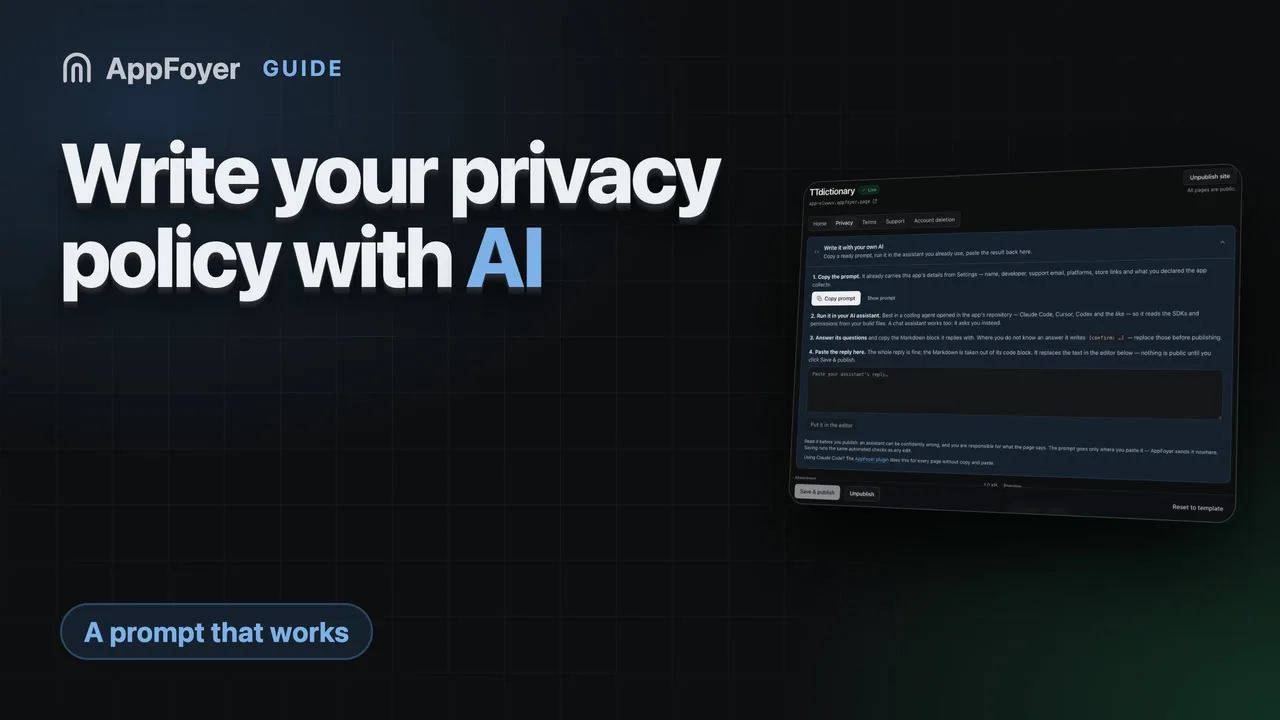
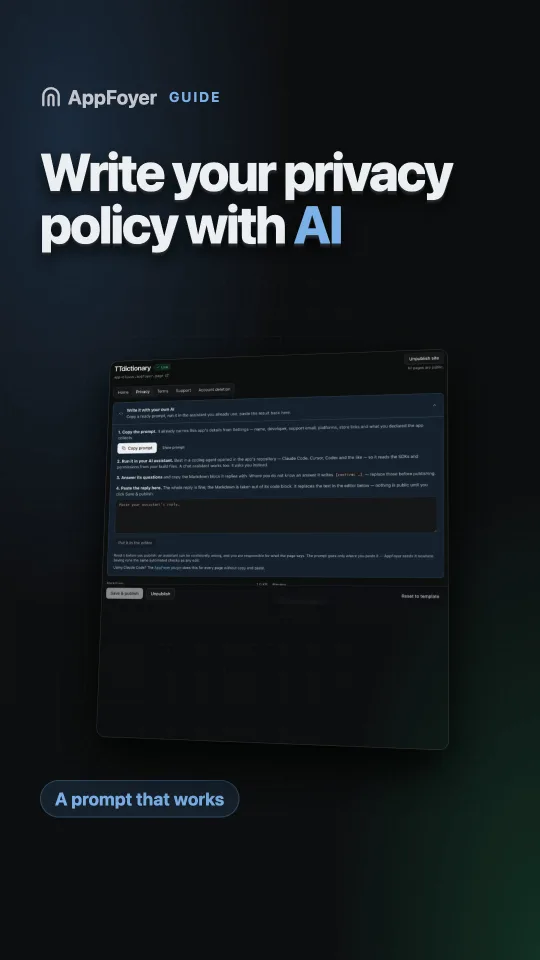
في محرر صفحة الخصوصية في لوحة التحكم لوحة باسم Write it with your own AI (اكتبها بمساعدك الذكي): الـprompt نفسه، مملوءًا مسبقًا باسم تطبيقك، والمطوّر، وبريد الدعم، والمنصات، وروابط المتجر، والبيانات التي أعلنتها. انسخه، وشغّله في أي مساعد تستخدمه، والصق الرد في اللوحة: يُستخرج الـMarkdown من كتلة الكود ويوضع في المحرر، حيث تُظهر المعاينة بالضبط ما سيُنشر. لا شيء يصبح عامًا حتى تنقر على النشر، ويمر النص بالفحوص الآلية نفسها التي يمر بها أي تعديل آخر.
صفحة الشروط فيها اللوحة نفسها بـprompt خاص بها، منشور في هل يحتاج تطبيقك إلى شروط خدمة؟. وإن كنت تستخدم Claude Code، فإن إضافة AppFoyer تؤدي المهمة نفسها للصفحات الخمس كلها دون نسخ ولصق، ولا تستطيع النشر هي الأخرى. لا يُعد أي من المسارين استشارة قانونية، وكل صفحة تذكر ذلك.
المصادر الرسمية
- Privacy policy requirements — مساعدة Google Play
- Provide information for Google Play’s Data safety section — مساعدة Google Play Console، عن كون بيانات حزم SDK مسؤوليتك في الإعلان عنها
- App privacy details on the App Store — Apple